
Perceivable
Alt text, captions, color contrast, and text alternatives ensure content is perceivable by all users.

We build and audit to WCAG 2.1 AA standards, ensuring your site is usable, navigable, and legally compliant for people of all abilities, without sacrificing design or performance.




 Accessibility-First New Builds
Our primary focus is building accessibility directly into new websites from the ground up. Structural markup, keyboard navigation, color contrast, and screen reader compatibility are built in by default, not addressed after the fact.
 Ongoing Compliance Monitoring
As your site evolves, so does your exposure. We provide ongoing monitoring to catch new violations introduced by content updates, plugin changes, or site expansions, keeping your compliance status current.
 Accessibility Audit
We conduct a comprehensive WCAG 2.1 AA audit of your existing website, identifying violations, prioritizing fixes, and delivering a clear remediation roadmap. You'll know what's broken, why it matters, and what it takes to fix it.

 Remediation Development
Once an audit is complete, our development team works through your site systematically, correcting accessibility violations at the code level so your site meets compliance requirements without disrupting your existing design.

ADA Title III applies to websites. Businesses with non-compliant sites face demand letters, litigation, and settlements, and the volume of cases filed each year continues to climb.

Roughly 1 in 4 adults in the U.S. lives with a disability. An accessible website ensures that portion of your market can find, navigate, and convert on your site without barriers.

Many WCAG requirements (semantic markup, descriptive alt text, clear heading structure) directly overlap with what search engines use to crawl and rank your site.

Accessible sites are faster, cleaner, and easier to navigate for everyone, not just users with disabilities. Compliance improvements routinely reduce friction and improve overall site performance.

Accessible by Architecture.
Accessibility compliance starts at the code level. Our development service builds every site to WCAG 2.1 AA standards from the ground up: clean semantic markup, keyboard-accessible components, and screen-reader-compatible structure baked into every build.
Every WCAG 2.1 requirement falls under one of four core principles. Together they define what it means for a website to be genuinely accessible and legally defensible.
Alt text, captions, color contrast, and text alternatives ensure content is perceivable by all users.
Keyboard navigation, skip links, and focus indicators ensure every function works without a mouse.
Clear language, navigation, and labels make content predictable and easy to follow.
Clean, valid code ensures screen readers, voice control, and braille displays can reliably parse your site.
From initial audit to ongoing monitoring, we follow a structured process that identifies risk, resolves violations, and keeps your site compliant as it grows.
We start by understanding your site, your business, and your compliance goals. Whether you need a full audit, targeted remediation, or an accessibility-first new build, we scope the engagement and align on the standard we’re building to.
We conduct a thorough WCAG 2.1 AA audit, combining automated scanning with manual testing across assistive technologies. You receive a detailed report documenting every violation, its severity, and a prioritized remediation plan.
For existing sites, our development team works through violations systematically at the code level.
For new builds, accessibility is built into every component, template, and interaction from day one, not retrofitted at the end.
Once remediation or development is complete, we conduct a full verification pass, confirming that all identified issues are resolved and that the site meets WCAG 2.1 AA conformance requirements.
Compliance isn’t a one-time event. As your site evolves, we monitor for new violations introduced by content changes, plugin updates, or site expansions, keeping your compliance posture current over time.
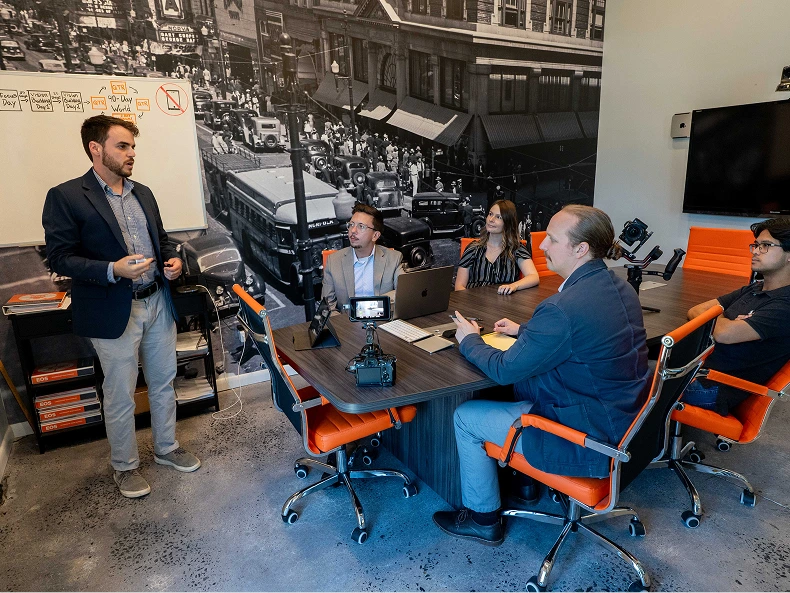




Senior level experts assigned to every account.
At VATIK, you work directly with a local project manager who guides the process from discovery to launch. Structured review windows and design checkpoints ensure you stay involved, informed, and confident in every stage of the project.
 Dedicated Project Manager
 Five Structured Post-Launch Touch Points
 Monthly Analytics Available
Our website services are built for organizations that need a site to drive real outcomes: leads, sales, trust, and growth. We work best with teams who value clarity, speed, and strong execution.
VATIK Creative is a full-service marketing agency specializing in web design, web development, digital marketing, and video production. Here are the most frequently asked questions we receive about website accessibility.
In the United States, ADA Title III has been applied to websites by federal courts, and the Department of Justice has issued guidance affirming that web accessibility is required. Businesses with public-facing websites, particularly in industries like retail, healthcare, hospitality, and financial services, carry meaningful legal exposure.
WCAG 2.1 AA is the internationally recognized standard for web accessibility and the benchmark used by courts and regulators when evaluating
ADA compliance claims. Meeting AA conformance is the widely accepted threshold for legal defensibility.
An audit identifies and documents accessibility violations across your site. Remediation is the development work that fixes them. We offer both as a combined engagement or as separate services depending on where you are in the process.
In most cases, an existing site can be brought into compliance through remediation without a full rebuild. The scope depends on how the site was originally built. We’ll assess this during the audit and give you an honest recommendation.
No. Automated overlay tools do not achieve WCAG 2.1 AA compliance and have been cited in litigation as insufficient. Genuine compliance requires structural code-level remediation, not a JavaScript overlay applied after the fact.
Audit timelines vary depending on site size and complexity. A standard small-to-mid size website audit typically takes one to two weeks, including the written report and remediation roadmap.
In most cases, no. The majority of accessibility requirements (semantic markup, keyboard navigation, ARIA labeling) are invisible to sighted users.
Where visual changes are required, such as color contrast adjustments, we work within your brand guidelines to maintain design integrity.
Our process is more than design — it’s a partnership. We work closely with your team to assess your needs, design precision-fit configurations.
"*" indicates required fields
Our design services start and ends with a best-in-class experience strategy that builds to provide you with an informed response.